
-
Products
-
Solutions
-
Company
-
News
-
Contact
-
Language

Home- News- Company Blog-How RFID Tags Reshape Retail Scenarios Amid the AI Wave — Supermarkets, Daily Chemicals and Beauty
Amid the digital transformation of the retail industry, RFID tags serve as a critical link connecting merchandise and data. Deployed in supermarkets, apparel stores, cosmetics shops and jewelry counters, they deliver full inventory visibility, intelligent management and enhanced customer experience. As the AI wave sweeps across industries, the value of RFID is further amplified: the decision-making capability of AI relies heavily on massive, real-time and highly granular product data collected by RFID chips.
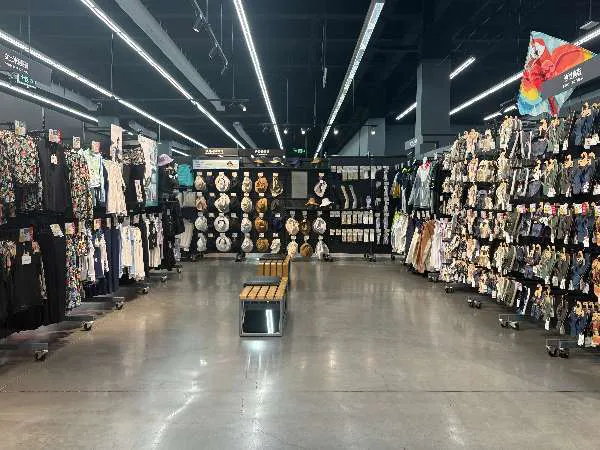
Supermarkets

The biggest efficiency bottleneck in supermarket retail lies at checkout. When items are placed in the shopping cart, RFID enables automatic identification, with prices tallied in real time and displayed on the cart-mounted screen. Customers can complete payment directly via linked online payment channels before leaving the store, bypassing traditional checkout counters entirely. Another integrated AI and IoT solution further optimizes this model: while RFID identifies goods, cameras and weight sensors perform cross-verification to avoid misreads or missed scans, achieving a system detection accuracy rate of 99.7%. AI also supports loss prevention by cross-checking items detected in the cart against billing data in real time to flag anomalous behavior and trigger alerts.

RFID tags can be affixed directly to the outer packaging of food, daily necessities and other goods. Automatic inventory counting and real-time tracking are available without major retrofits. Featuring outstanding anti-interference and anti-shielding performance for liquid packages and metal-cased products, they guarantee stable and reliable reading and writing in complex environments.
Daily Chemicals & Beauty

Beauty brands face two core challenges: signal interference caused by liquid and metal packaging, and product expiry management that directly impacts waste. Industry solutions feature RFID smart tags engineered to adapt to complex packaging such as glass containers, enabling unit-level digital identification and full-lifecycle traceability. For store operations, AI leverages real-time shelf data fed back by RFID to prompt restocking and track product shelf life. Automatic alerts are sent to distribution centers and retail outlets when products near expiration, cutting back on backroom waste at the source. In domestic implementations, a Chinese beauty brand achieved zero counterfeit records after adopting tamper-evident RFID tags, while a multinational group reduced grey-market diversion by 76%.

N235
Designed for high-end cosmetics with a frangible structure. The tag becomes invalid once peeled off, ensuring one-time validity of data. It fundamentally eliminates counterfeiting and parallel imports to safeguard brand reputation.

N18
Ultra-thin and compact, it fits neatly on cosmetic packaging with sensitive signal performance. It supports fast bulk reading to accelerate countertop inventory and outbound operations.
How RFID Tags Reshape Retail Scenarios Amid the AI Wave — Apparel and Jewelry
Laxcen Named a 2026 Most Promising Enterprise by EY and Fudan University
Laxcen Showcases RFID Label Solutions at LOUPE Americas 2026 in Chicago
2026 Chicago
2025 RFID Smart Inventory Robot Market Research Report
Laxcen USA Officially Opens in Laguna Hills, CA